VES Framework Model
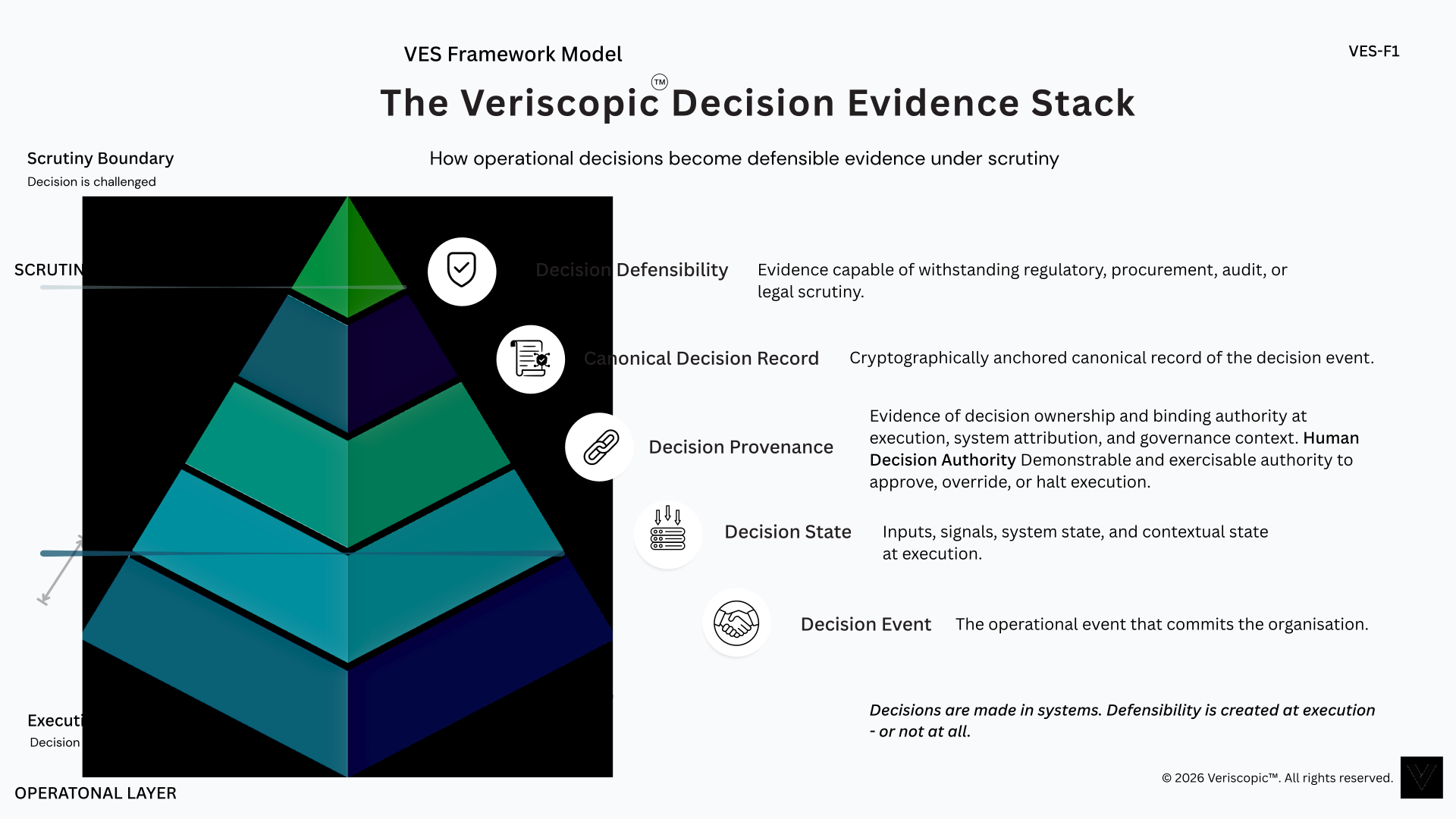
The Veriscopic
Decision Evidence Stack
A standard defining how operational decisions become verifiable evidence under scrutiny.
Decisions are not tested when they are made — they are tested when they are challenged.
Authority of the standard
VES defines the structural requirements for decision-state evidence in systems subject to audit, dispute, or regulatory scrutiny.
- How decision-state must be captured
- How records must be sealed
- How evidence must be independently verified
Systems that do not produce VES-compliant records cannot provide independently verifiable evidence.
Decision-state is evidentiary
What existed at the moment a decision was executed determines defensibility.
Reconstruction is insufficient
Logs, documents, and system traces cannot reliably reproduce decision conditions.
Admissibility of evidence
VES-L4
Sealed Decision-State
Captured at execution, sealed, timestamped
VES-L3
System Records
Logs and telemetry
VES-L2
Documentation
Reports and approvals
VES-L1
Narrative
Post-hoc reconstruction
Only VES-L4 provides deterministic proof of decision conditions.
Structure of the standard
Operational layer
Where decisions are formed and executed.
Evidence layer
Where decision-state becomes a tamper-resistant record.
Scrutiny layer
Where evidence is tested under audit and dispute.
VES Certification & Marks
Certification reflects the ability to produce verifiable decision-state evidence under scrutiny.

Anchored
Sealed + independently timestamped
Sealed
Full decision-state captured at execution
Platinum
Continuous, litigation-grade evidence chain
Verified
Structured decision records present
Regulatory alignment
- EU AI Act — record keeping and traceability
- DORA — operational resilience and auditability
- Digital Services Act — decision accountability
- Supervisory and litigation contexts
VES provides the evidence layer governance frameworks rely on.