Decision Evidence Stack
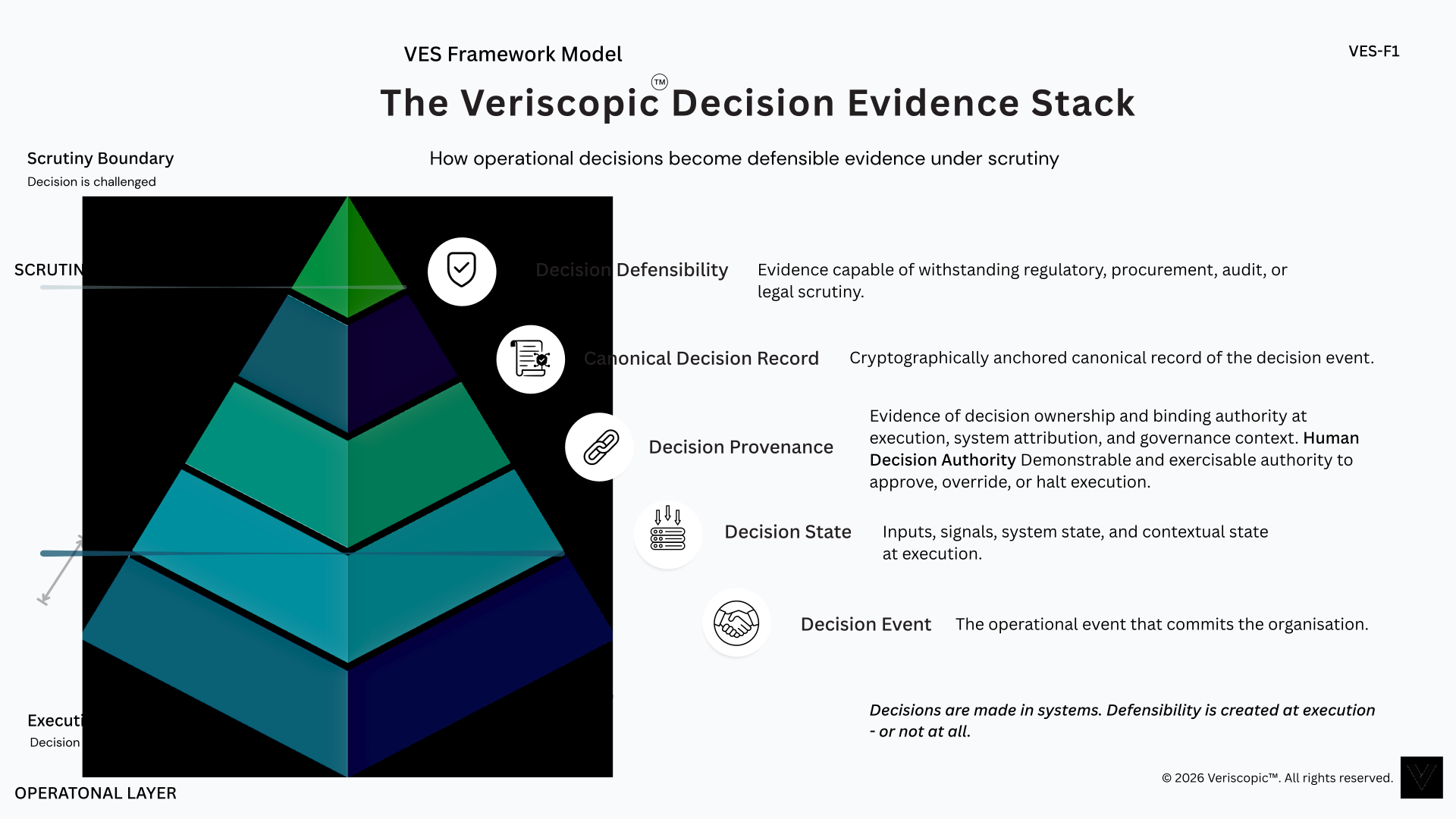
The VES-F1 model illustrates how decision-state is formed, captured, and tested under scrutiny. Each layer represents a necessary condition for defensibility.
VES Framework Model
The Veriscopic Decision Evidence Stack (VES-F1) illustrates how operational decisions become structured, verifiable evidence capable of withstanding scrutiny.
Evidentiary substrate
Decision State, Provenance, and Event form the substrate of what actually existed at execution.
Defensibility layer
Canonical records and defensibility determine whether that evidence survives scrutiny.
How to read the model
Evidentiary Substrate
The foundation of what actually existed at execution. Includes inputs, provenance, system state, authority, and constraints.
If it is not captured here, it cannot be proven later.
Decision State
The full set of conditions under which a decision was made. This is the minimum unit required to test whether a decision holds.
Integrity Layer
Ensures the decision-state is sealed, time-bound, and tamper-evident.
Scrutiny Layer
Where decisions are challenged by regulators, counterparties, auditors, or courts.
At this layer, explanation is irrelevant. Only proof remains.
Foundational distinction
Governance defines intent. Enforcement applies constraints. Observability records activity.
None of these establish what can be independently proven to have existed and held at the moment of execution.
The evidentiary substrate binds:
- authority
- context
- system state
- constraints
- outcome
into a single, time-bound record that determines whether a decision survives scrutiny or collapses into reconstruction.